
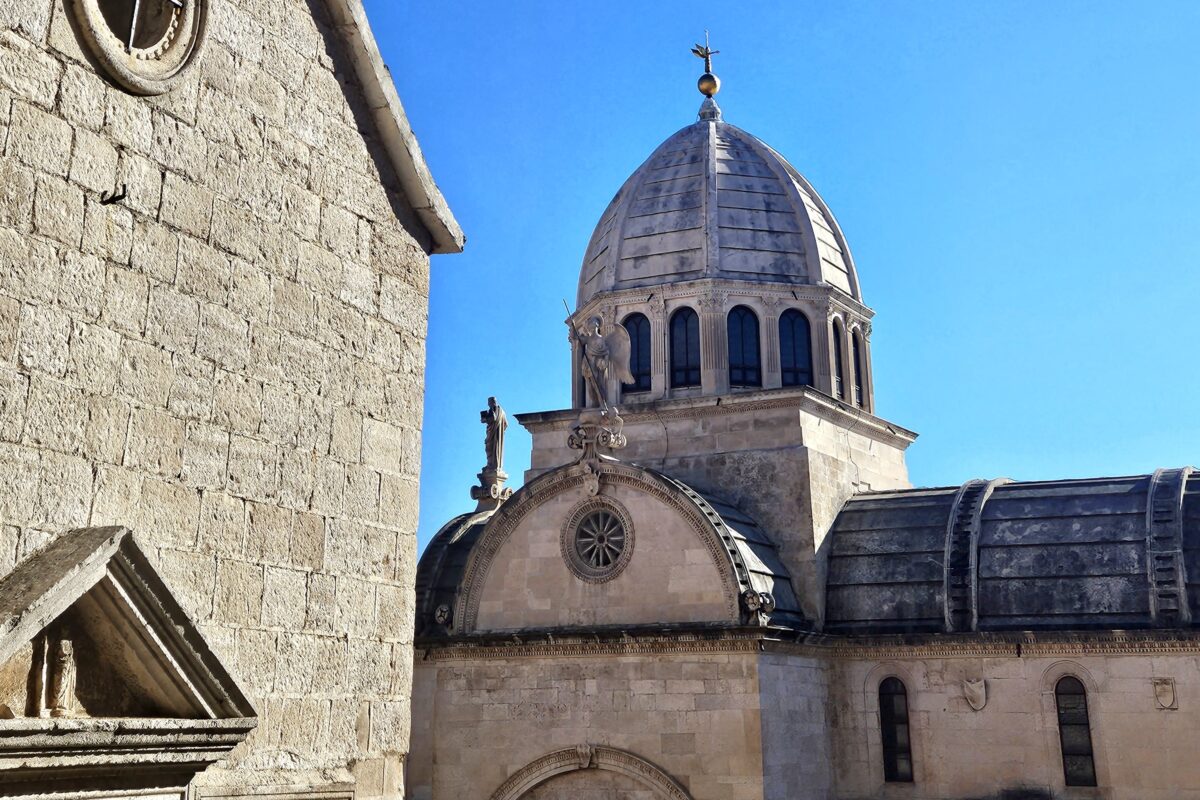
If you’re heading down the Croatian coast, there’s a good chance Šibenik is somewhere between where you’ve been and where you’re going. It’s tucked right between Split and Zadar, and most travelers either pass through or stop for a quick stop before moving on. Which is a shame, because Šibenik deserves much more than a quick pit stop.
Unlike its bigger, flashier neighbors, Šibenik still feels like a real city; people live here, kids play in the streets. Locals do their grocery shopping in the morning, meet up for a coffee, then socialise with a glass of wine or a beer in the afternoon. This is what they’ve done for generations, and it’s one of those places that’s stayed itself, even as tourism in Croatia has exploded. And still, Šibenik manages to hold some serious bragging rights: it’s the only city in Croatia with two UNESCO World Heritage Sites. Two.
Šibenik is built in stone and on hills, which means you’ll be climbing a lot of stairs. But you’ll also find coastal views, good food, locals who are genuinely friendly, and plenty to do without needing to elbow your way through crowds.
Šibenik Map & Resources
- 🗣️ Language: Croatian
- 💶 Currency: Euro
- 👨👩👧👦 Population: 31,000
- 🤩 Perfect for: Culture vultures, history buffs, beach bums
Backpacking Šibenik, Croatia — Travel Guide 💼
Best Time to Visit Šibenik, Croatia ☀️
Summer (July and August) is when everything is open, the beaches are buzzing, and the summer events (concerts, exhibitions, festivals) are in full swing — in the heart of the city, and up at the fortresses, and Šibenik has four of those! That said, it’s still quieter than the other big-name cities. You won’t be stuck in hours-long lines or overwhelmed by selfie sticks.
If you want a more relaxed and affordable visit, go in May, June, or September. The weather’s still good, the sea is warm enough for swimming, and prices are generally lower. Even in early October, you can catch a sunny stretch that feels like late summer.
Where to Stay in Šibenik, Croatia 🛌
If you’re on a budget, skip the hotels. Your best bet is to rent a private apartment, and there are a lot of them. In the old town, you’ll find charming little stone apartments with tiny windows and steep steps that make you feel like you’ve stepped into a movie. They might cost a bit more, but the location is unbeatable.
For tighter budgets, look just outside the old town. Neighborhoods like Varoš, Crnica, or Baldekin are all close enough to walk but far enough to offer cheaper options. Hosts in Šibenik are usually super welcoming and will happily give you advice, tips, and maybe even a shot of rakija (a Croatian type of grappa) if you arrive in the evening.
Things to Do in Šibenik, Croatia 🏙️
1. Wander the Old Town 🚶♀️➡️
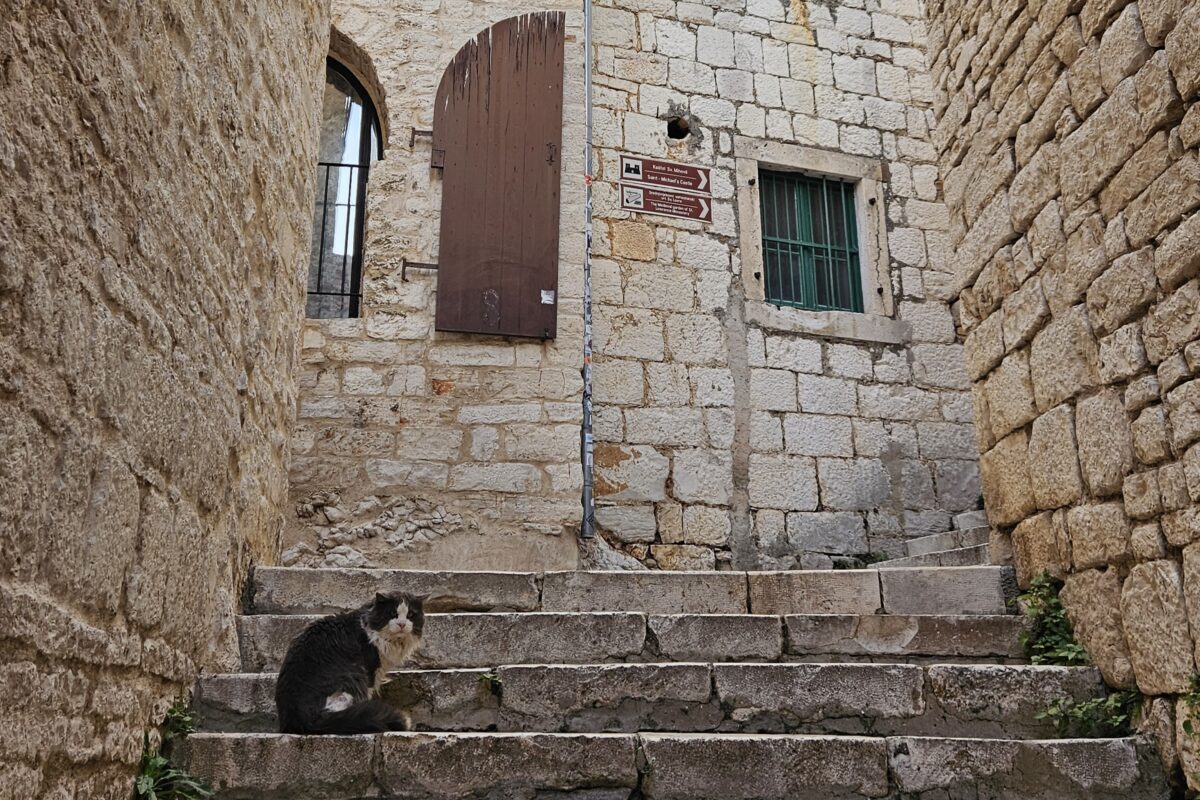
Start with no plan. Just walk. Šibenik’s old town is made for wandering — a tangle of narrow streets, stone staircases, and little squares that pop up when you least expect them. There’s a new detail on every wall, a local bar hiding behind every corner, and a strong possibility you’ll get lost (in the good way). This isn’t a place for maps. It’s a place for slowing down.
I lived in Šibenik for a decade, and even after 10 years, I would often still find new corners and details in the old town I’ve never noticed before. That’s the kind of place it is – full of stories, small details, and surprises around the corners.
2. Marvel at St. James’s Cathedral ⛪
This isn’t just another old church you glance at and move on from. St. James’s Cathedral is a UNESCO World Heritage Site and one of the most fascinating buildings in all of Croatia, and definitely not something to skip. Built entirely out of limestone, with no cement or mortar holding it together, it’s basically a giant stone puzzle that’s somehow still standing strong five centuries later.
From the outside, take your time. Look closely and you’ll notice something strange — a long row of 71 sculpted faces carved into the exterior walls. Locals, they say. Regular people, frozen in stone, watching over the city for generations. Add to that the lions by the front entrance and the detailed carvings around the windows, and you’ll see this place isn’t trying to be flashy, it’s just quietly stunning.
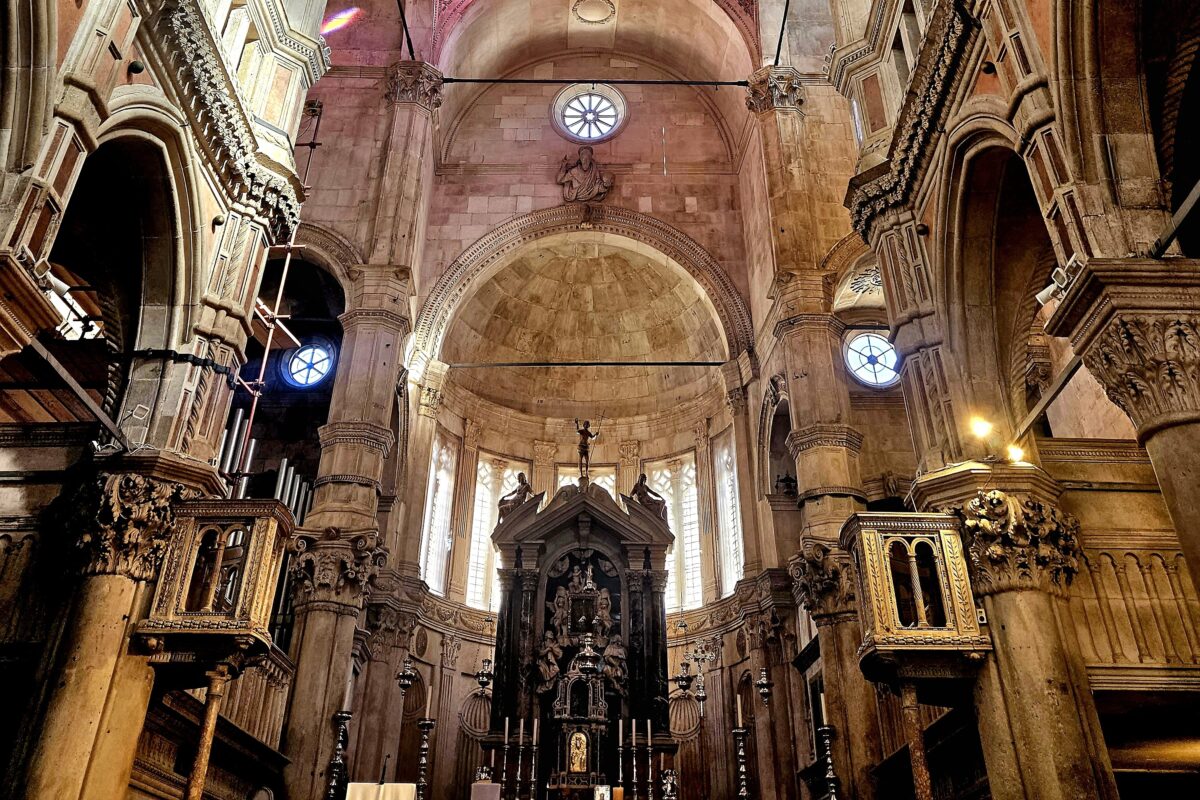
Inside, it’s calm and cool, with high stone walls and that soft echo you only get in places that have been around for centuries. The dome is the real star here, soaring above you, made from curved stone slabs that somehow hold themselves up without any modern tricks. It’s one of those architectural “how did they even build this?” moments.
Take the steps down to the baptistery. The ceiling there is carved with delicate floral and angelic details, completely different in style, smaller, softer, more intimate.
And a fun fact for Game of Thrones fans: Šibenik stood in for Braavos in Season 5, and the cathedral played its part too. So if something about it feels familiar, that might be why.
2. Soak Up History at the Fortresses 🏰
St. Michael’s Fortress
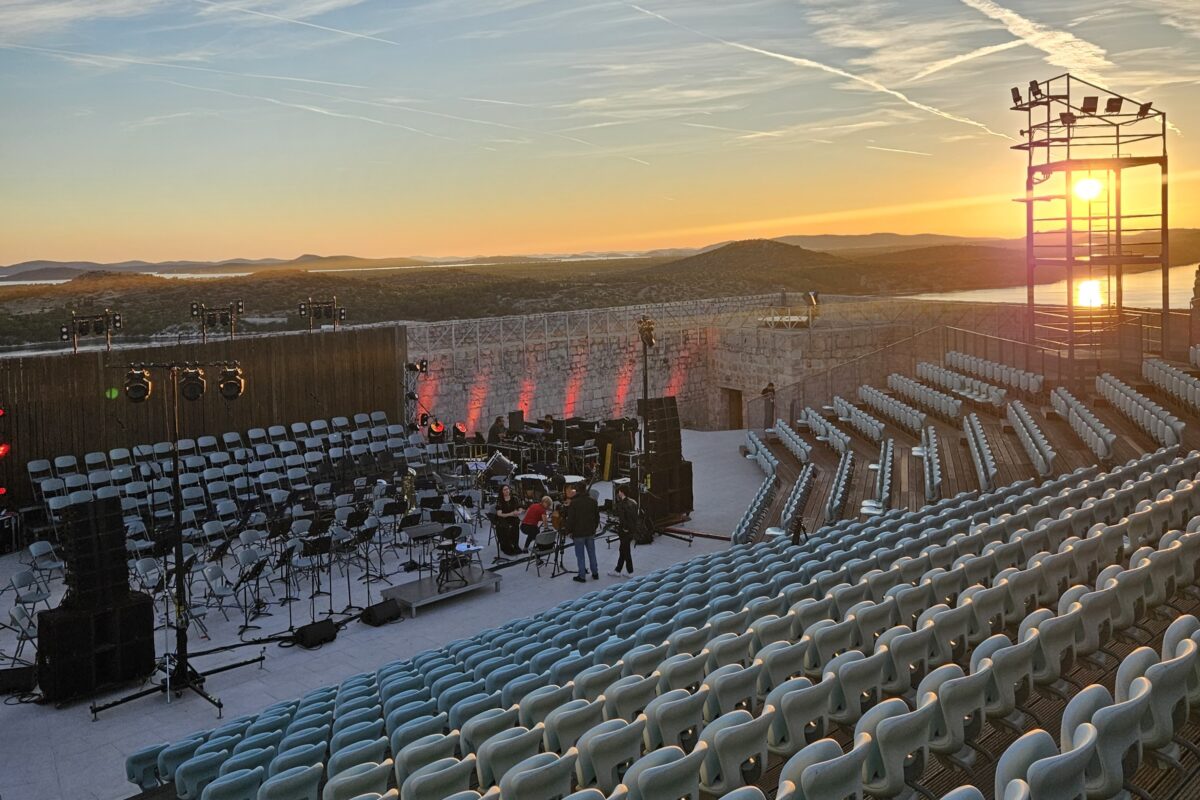
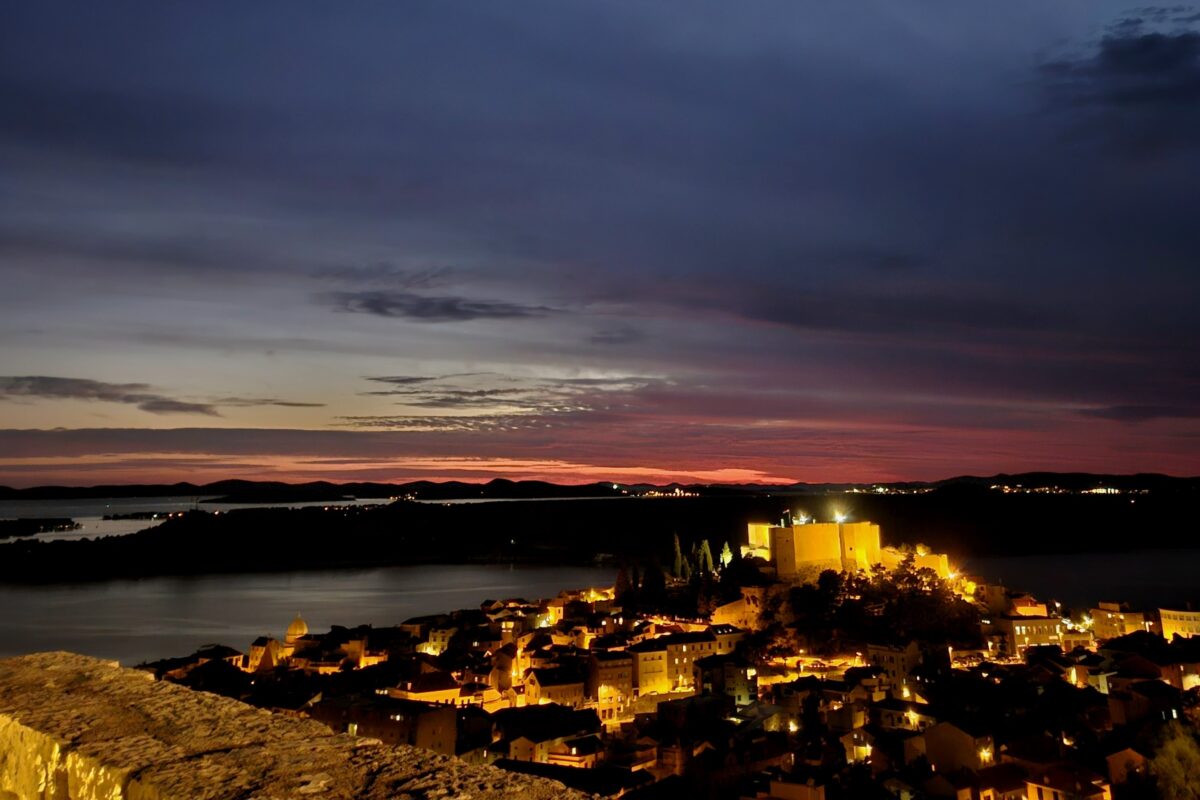
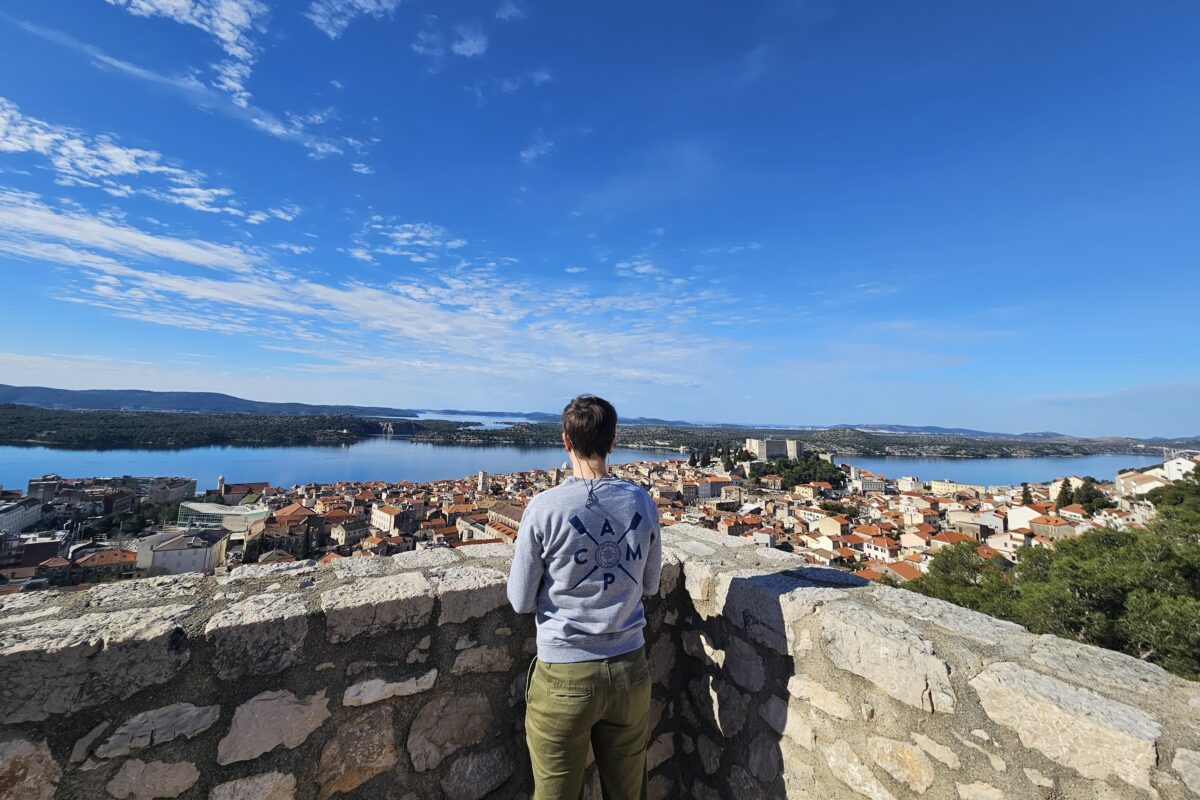
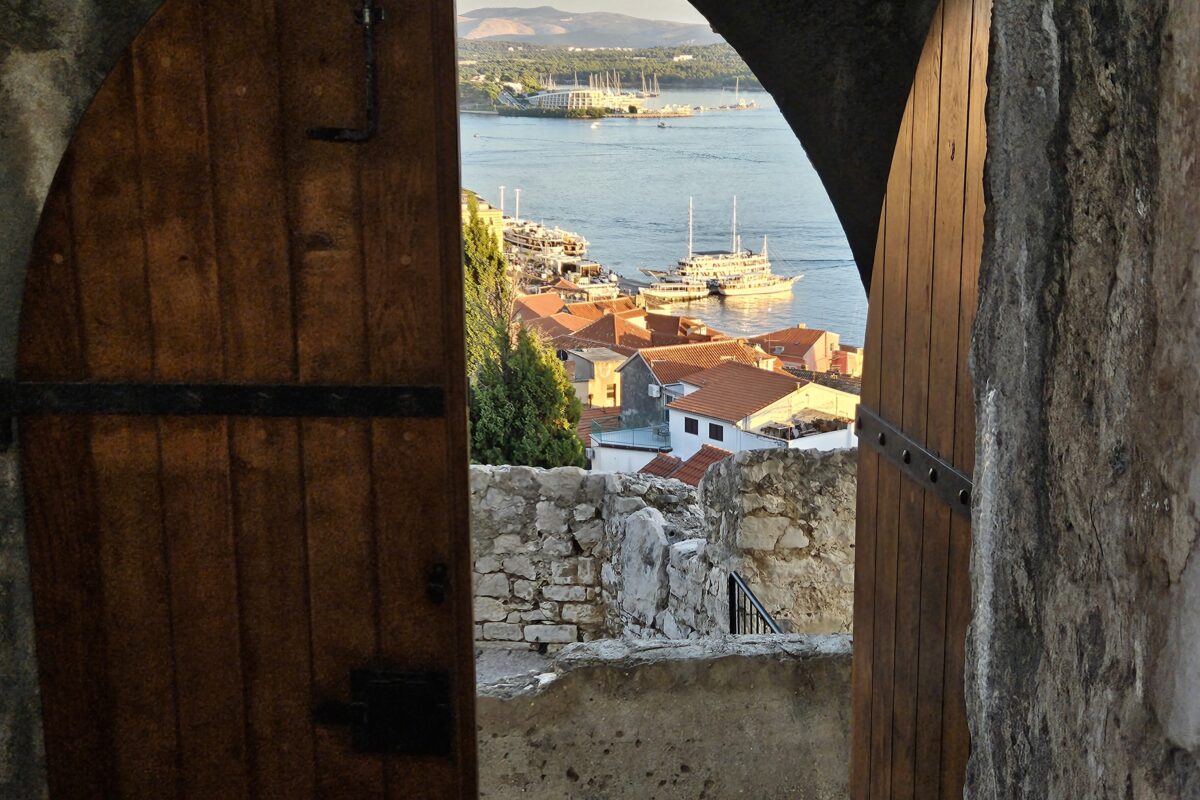
You’ll spot this one from almost anywhere in town. Climb the stairs behind the cathedral and head up. It’s not far, maybe 10 minutes, but it’s steep. At the top, you’ll find views of the sea, the old town, and the surrounding islands. It’s also a major concert venue, so check if there’s a show during your visit. Seeing a live gig here, especially as the sun goes down, is something you’ll remember.
St. Nicholas Fortress (UNESCO)
This is Šibenik’s second UNESCO World Heritage Site, and the only sea fortress of its kind in Croatia. It stands at the entrance to St. Anthony Channel, like a stone gatekeeper watching over the bay. Built in the 16th century to defend the city from naval attacks, it still feels dramatic, especially when you see it rising from the water with no land in sight.
You can’t walk there; the only way to visit is by booking a boat tour, which leaves from the city center. The ride itself is part of the experience: slow, quiet, and full of salty air and open views. Once you arrive, you can walk the fortress walls, peek into tunnels, and imagine what life was like for soldiers stationed there centuries ago.
Barone and St. John’s Fortresses
Right above the old town are two more fortresses worth visiting. Barone is the one to go to for drinks with a view. The café there is chill and rarely crowded. Just a short walk away is St. John’s, the least developed of the bunch but great for sunsets.
4. Hike or Bike Along St Anthony’s Channel Promenade 🚲
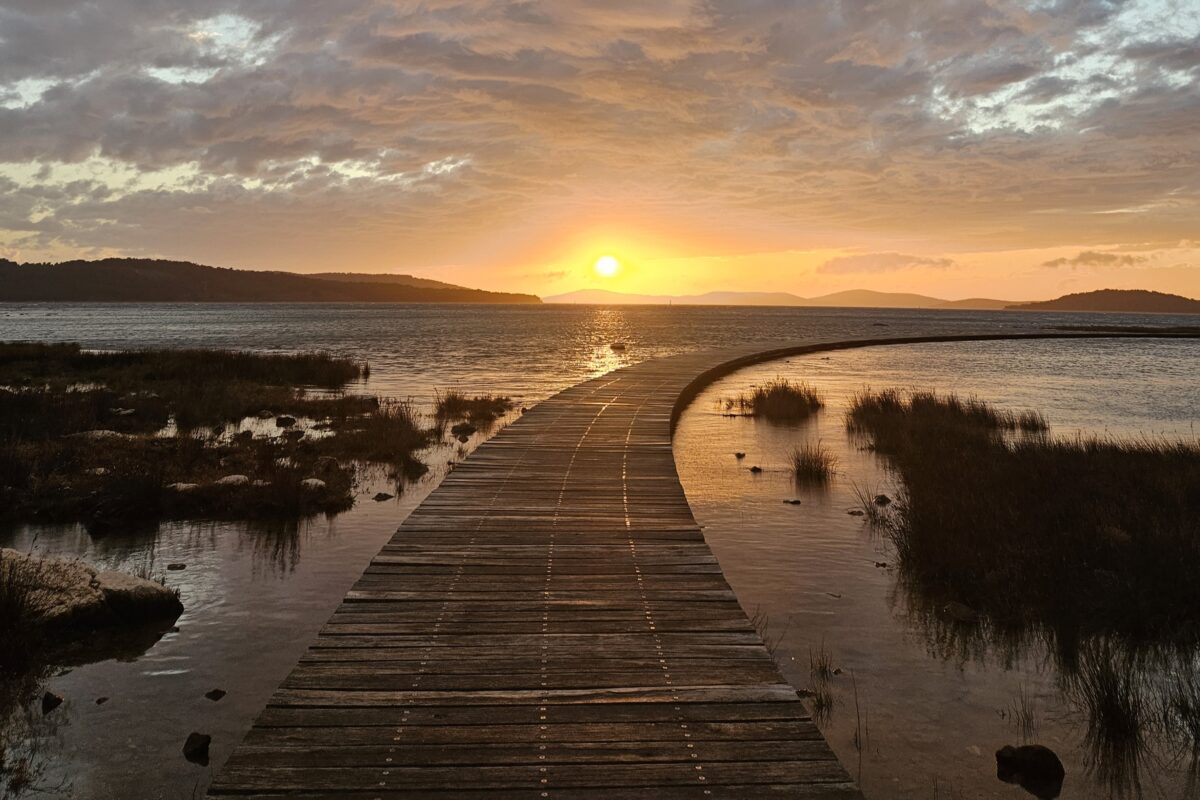
Rent a bike or go for a long walk along St. Anthony’s Channel. It’s one of the more peaceful parts of Šibenik, and you’ll pass old bunkers, an underwater tunnel, and even a small church carved into the rocks above. If you go all the way, you’ll end up across from St. Nicholas Fortress, close enough to see its shape and detail. Bring snacks, water, and your swimsuit since there are plenty of spots to jump in.
5. Hit the Beach 🏖️
Banj Beach is closest to the center, walkable in about 10 minutes, and has one of the best views of the old town. It’s small, with a bar and changing cabins, and a good spot for a quick swim or a lazy few hours.
Jadrija, on the other hand, is where the locals go. Take the boat or a short drive and spend the day there. Colorful cabins line the beach, there’s shade under the pine trees, and you’ll want to grab a donut at Rushi (proclaimed the best donuts in Šibenik by locals), the little bakery/bar that’s become a favorite.
6. Visit the Farmer’s Market 🥕
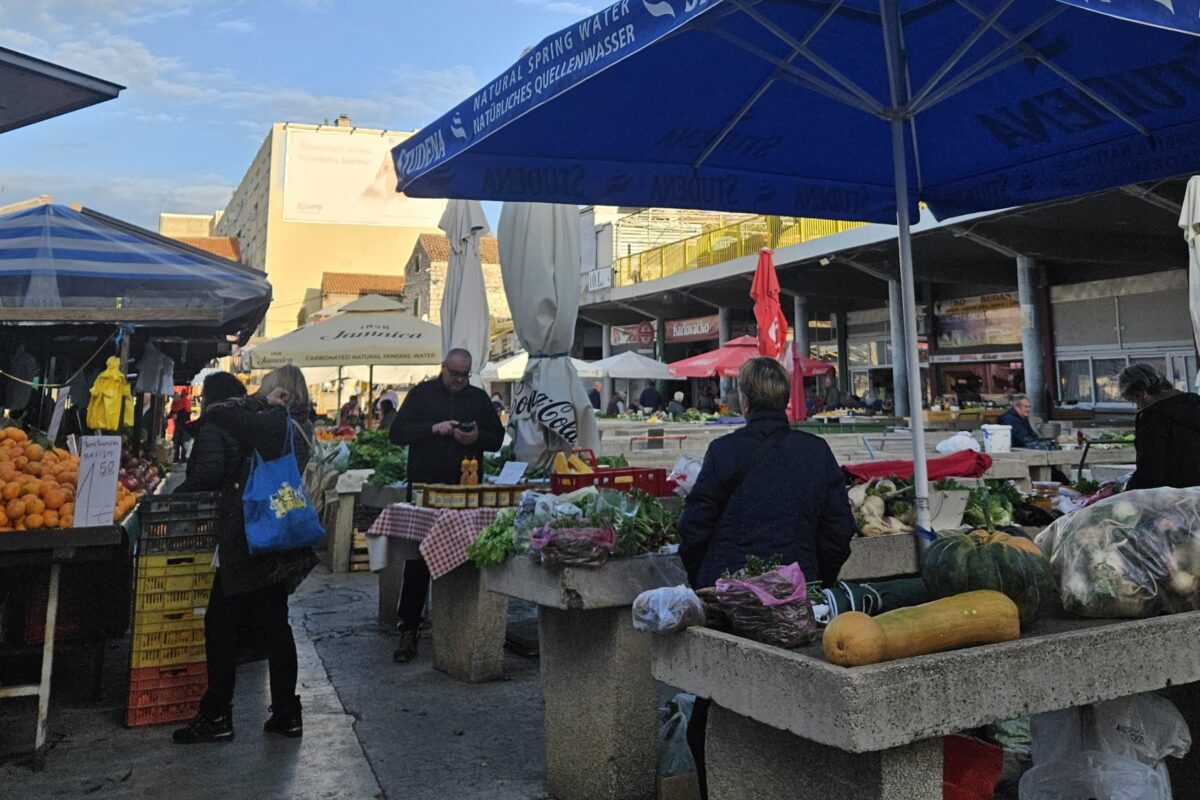
The Farmer’s Market is one of the most vibrant places in the city, especially in the early morning. It’s where locals go shopping for fresh ingredients to cook lunch. So, go in the morning when it’s busiest and freshest. You’ll find local vegetables, herbs, cheese, meat, and fish, most of it grown or caught nearby. Even if you’re not cooking, it’s worth a visit. Say hi to the vendors, ask about their produce, and you might get a free fig or a taste of something you’ve never heard of.
7. Pay Homage at Dražen Petrović Court 🏀
Basketball fans will know the name. Dražen Petrović, one of the best European players of all time, was born in Šibenik. His old neighborhood, Baldekin, now has a statue and a basketball court named in his honor. If you’re into sports or just want to see another side of the city, swing by.
Food and Drink in Šibenik, Croatia 🥘
You don’t need to spend a lot to eat well in Šibenik. Some of the best food is simple, homemade, and served with zero pretense.
For local flavors, Konoba Marenda is the spot. The menu changes daily based on what’s fresh. It’s casual, family-run, and affordable.
This was always my go-to for marenda, after which the restaurant is named. It’s a Dalmatian meal somewhere between breakfast and lunch. I’d head there whenever I was craving something that reminded me of home. My favorite? Fried smelt with Swiss chard.
Craving something more modern? Visiani Bistro offers local dishes with a creative twist, and Okus Soli is great for brunch – think eggs, artisan bread, and fresh juice. For pizza, Azimut doubles as a cultural venue and serves a solid pie. For something a bit more fancy, but 100% local, Pjat is a bit pricier but worth it if you want a proper sit-down dinner.
Sweet tooth? KaGrom has the best ice cream in town. Period.
If you’re eating traditional, try pašticada, a slow-cooked beef stew that’s rich and tender. Another must-try is the Skradin risotto, a dish that takes hours to prepare. Locals swear by Konoba Vinko for this one, it’s outside the city but doable by car or taxi.
Getting Around Šibenik, Croatia 🚶♀️➡️
Šibenik is walkable, but full of stairs. The old town is pedestrian-only, so bring comfortable shoes. If you’re staying farther out or want to explore beaches or the channel, rent a bike, or take a local bus.
There’s also a small ferry service that connects the city to nearby islands and beaches, like Jadrija, Zlarin and Prvić. It’s cheap, scenic, and feels more fun than sitting on a bus.
How to Get To Šibenik, Croatia 🚌
The easiest way to reach Šibenik is by bus. Buses from Split and Zadar run regularly and take around 1.5–2 hours. The bus station is right by the sea and a short walk from the old town.
There’s also a train station, but connections are slower and not as reliable.
If you’re driving, there’s parking near the city center.
Ferries and boat lines connect Šibenik with nearby islands, and it’s possible to arrive by sea if you’re already hopping along the coast.
Final Thoughts on Šibenik, Croatia 💭
Šibenik isn’t trying to impress anyone. That’s what I loved about living here. It’s just doing its own thing, and if you slow down enough, it lets you in.
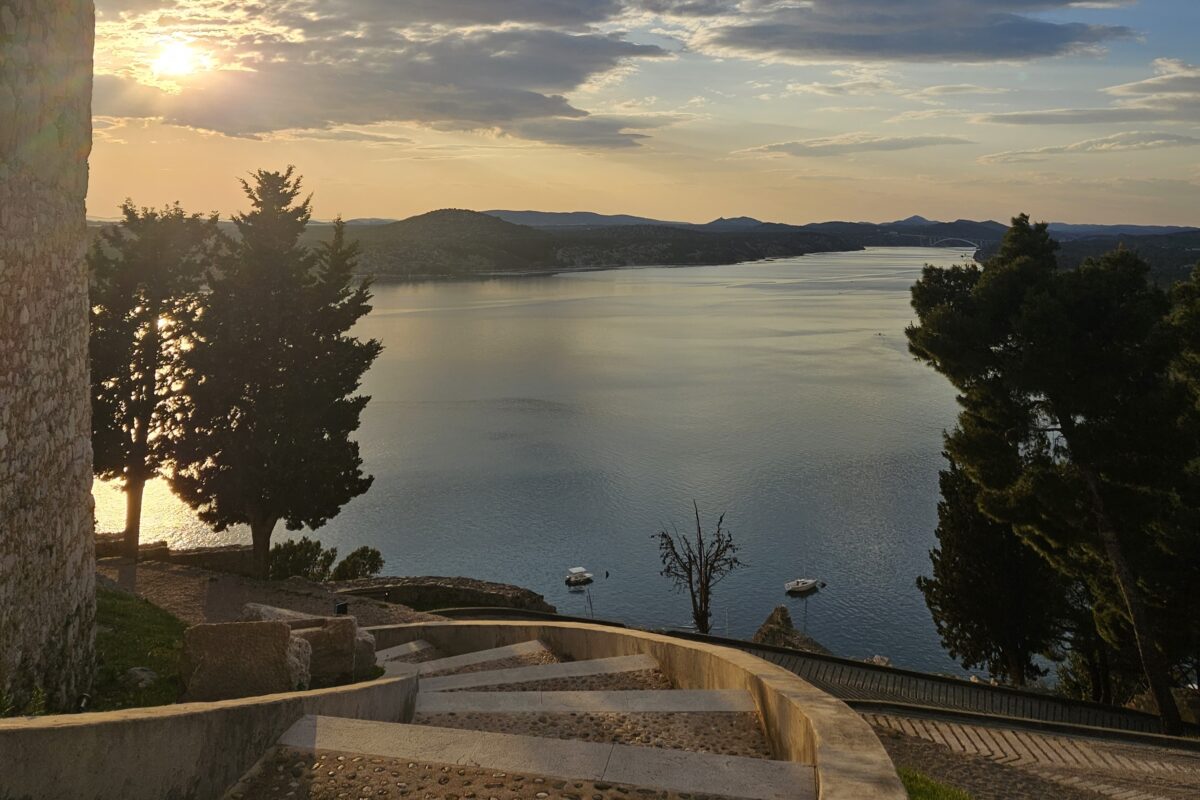
So, talk to people, wander without a plan, and stay long enough to see how the light hits the stone at different times of day. I’ve lived in Šibenik for ten years, which is way more than I planned. But it’s just one of those places that grows on you, and if you’re not careful, you might just want to stay.
Where to Go Next: ➡️
Šibenik is a great base for exploring central Dalmatia. If you’ve got time, consider these easy day trips:
Murter Island – A bit farther out, but worth the bus ride. Known for its beautiful beaches like Čigrađa and Slanica, and good food spots like Lantana, Konoba Boba, or the fun and quirky Burger House Mu.
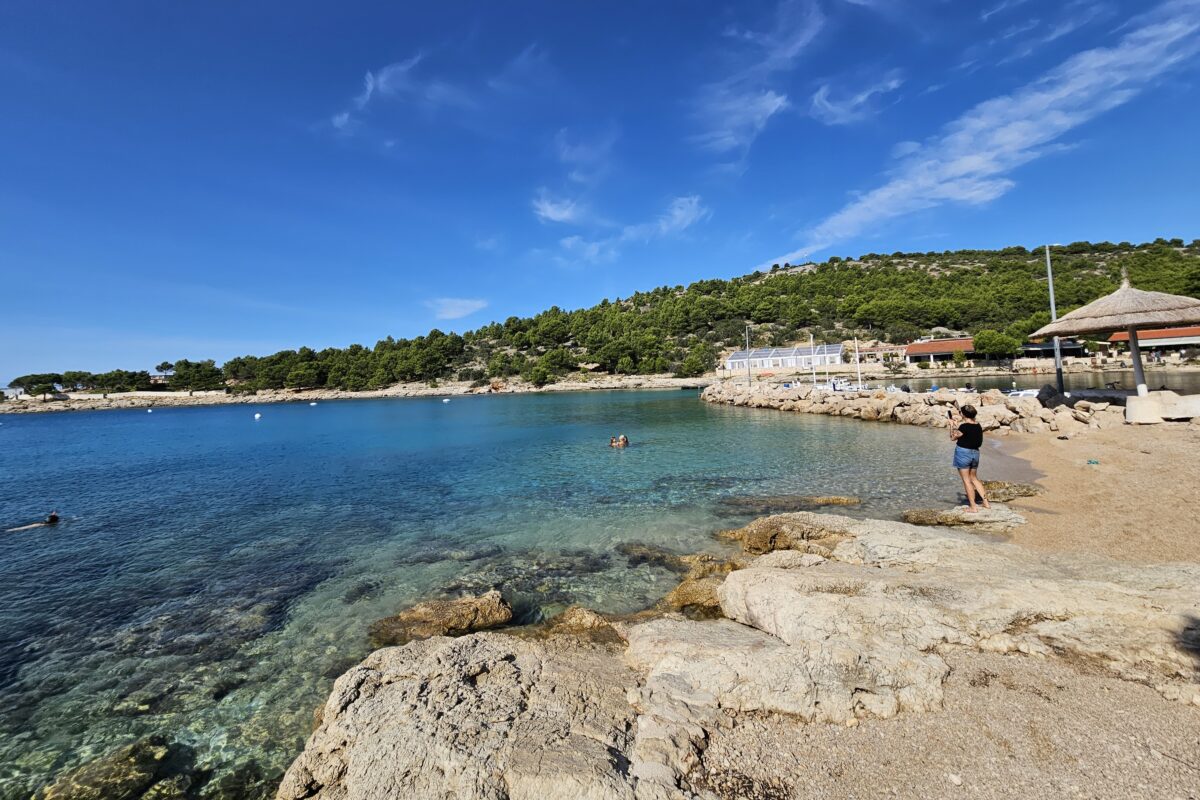
Zlarin or Prvić – Two nearby islands with no cars, quiet beaches, and small museums (Zlarin has a coral center; Prvić is home to a museum dedicated to inventor Faust Vrančić). Boats leave daily from the city pier.
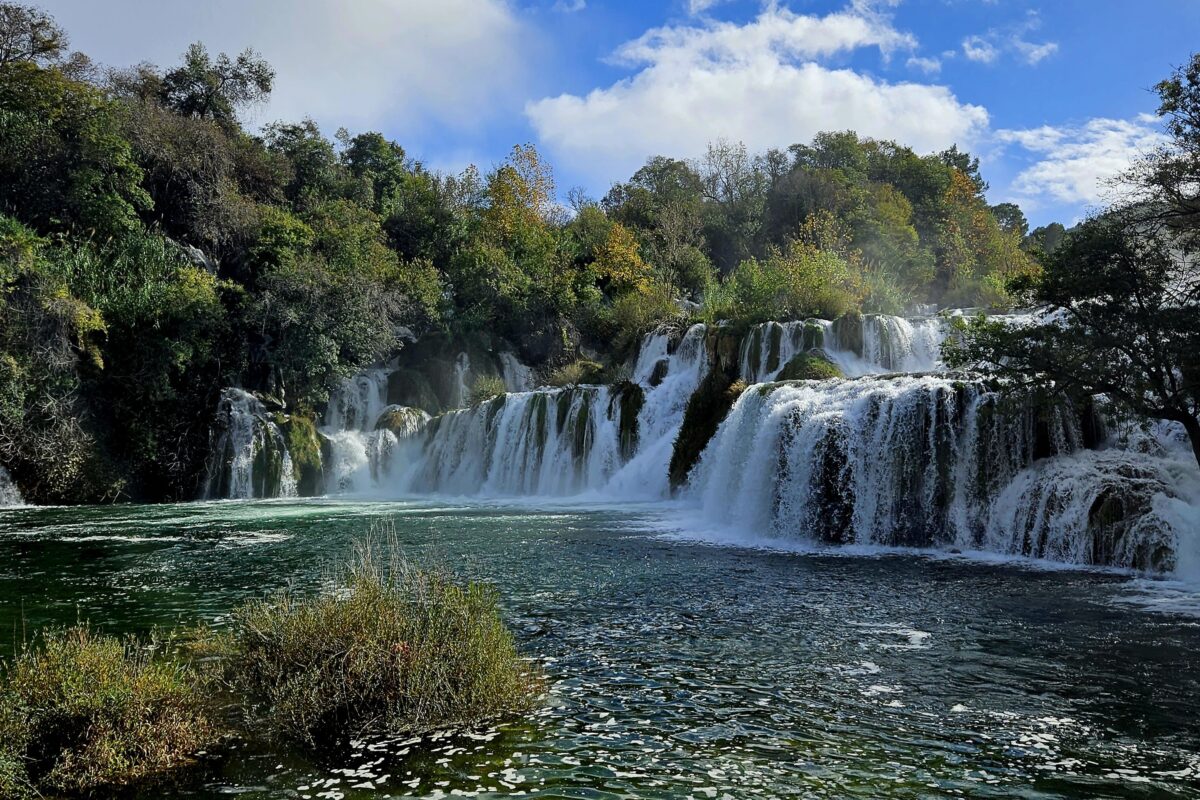
Krka National Park – Just 20 minutes away. Think waterfalls, wooden walking paths, and stunning nature. You can take an organized tour or a local bus.
Kornati National Park – A chain of islands you can only reach by boat. Tours leave from Šibenik and are perfect if you want a whole day on the sea.
Have you been to Šibenik? Let us know about your experience in the comments.

Nina Medić
Nina Medić is a writer with a Master’s Degree in Journalism and PR, and over 10 years of experience working in newsrooms. Before going freelance, she was part of the PR and marketing team at a prominent cultural institution in Croatia. These days, she runs her own content writing business and writes a Substack newsletter called Write Despite, where she shares stories, writing lessons, and what it’s really like to build a creative life.