
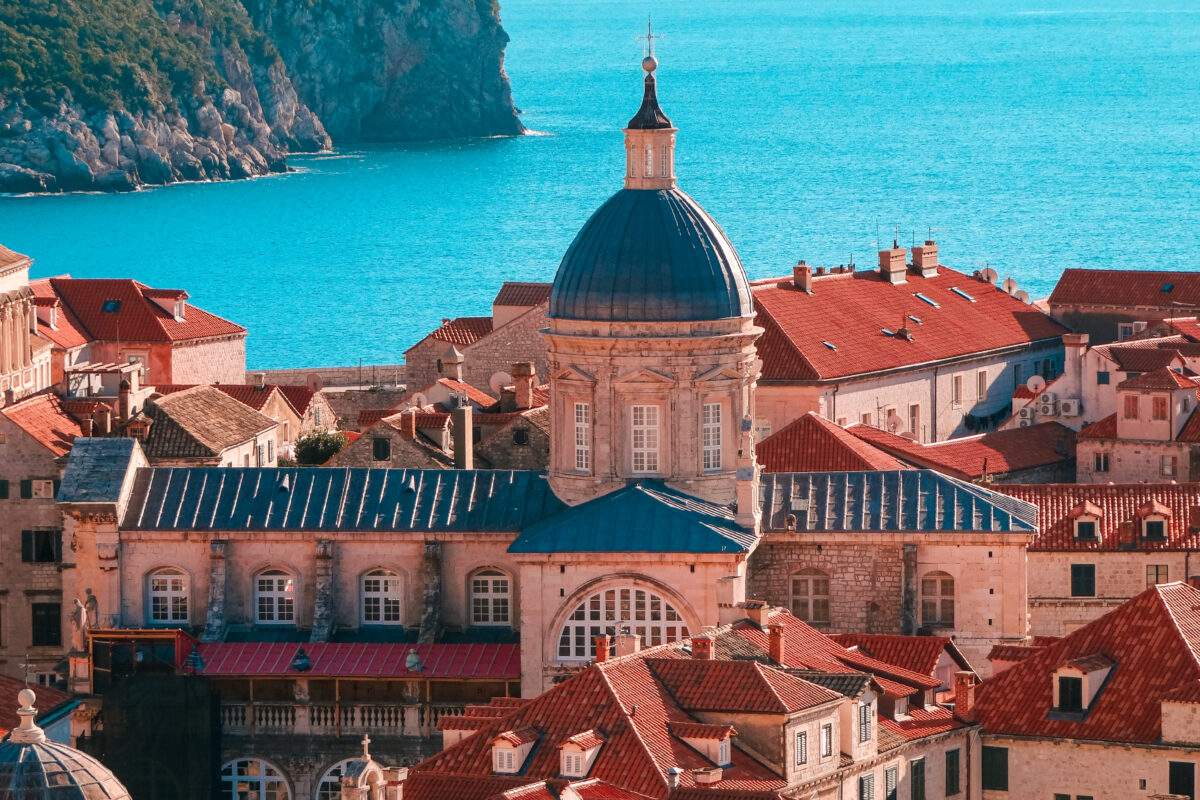
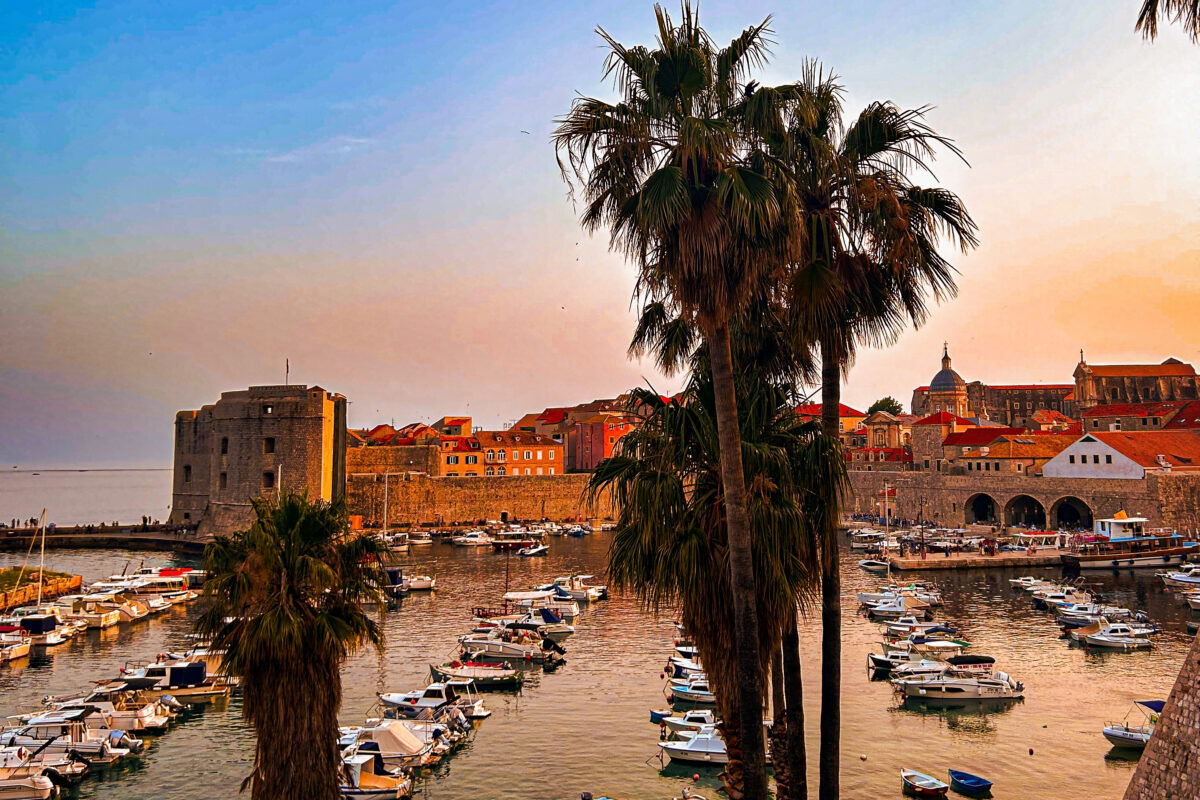
Dubrovnik, located on the Dalmatian Coast, is the most visited city in Croatia. It’s also recognised as one of the safest cities in Europe.
What makes the city so special? For starters, there are the world-famous City Walls, the small stone streets around the Old Town, the beautiful island of Lokrum, and most importantly, the people; locals who love seeing the city full of life.
As someone who takes his kid to school in the Old City every day, I still admire the beauty of Dubrovnik each day. I shoot photos and fly drones as a hobby, and honestly, every angle in the Old City looks like a postcard. That’s why Dubrovnik was chosen as a filming location for iconic TV shows and movies like Game of Thrones, Robin Hood and Star Wars. It’s not uncommon to see film stars wandering the city’s streets!
It doesn’t matter who you are, where you’re from, what you look like, or what you believe — everyone is welcome here.
Dubrovnik Map & Resources
- 🗣️ Language: Croatian
- 💶 Currency: Euro
- 👨👩👧👦 Population: 41,000
- 🤩 Perfect for: History buffs, film fans, beach lovers
Dubrovnik, Croatia: Travel Guide and Tips from a Local 🧳
Best Time to Visit Dubrovnik, Croatia ☀️
The end of September is the ideal time to visit Dubrovnik. Why? There are fewer crowds, but the weather is still great and the sea is still warm. Locals still swim until mid-November (last year, my mom’s last swim was November 15, at 20°C sea temperature).
Avoid August if you hate crowds. But honestly, Dubrovnik is beautiful all year round.
Where to Stay in Dubrovnik, Croatia 🛌
Disclosure: Some links on this page are affiliate links. We always write our articles before checking if affiliate links are available.
Three of the best accommodation options in Dubrovnik
Budget: Guest House Nikolina
Set 2 km outside the Old Town, this cosy guesthouse is highly rated for comfort and cleanliness. Guests rave about the friendly staff and the balconies offer fabulous sea views.
Mid-Range: Villa Leoni
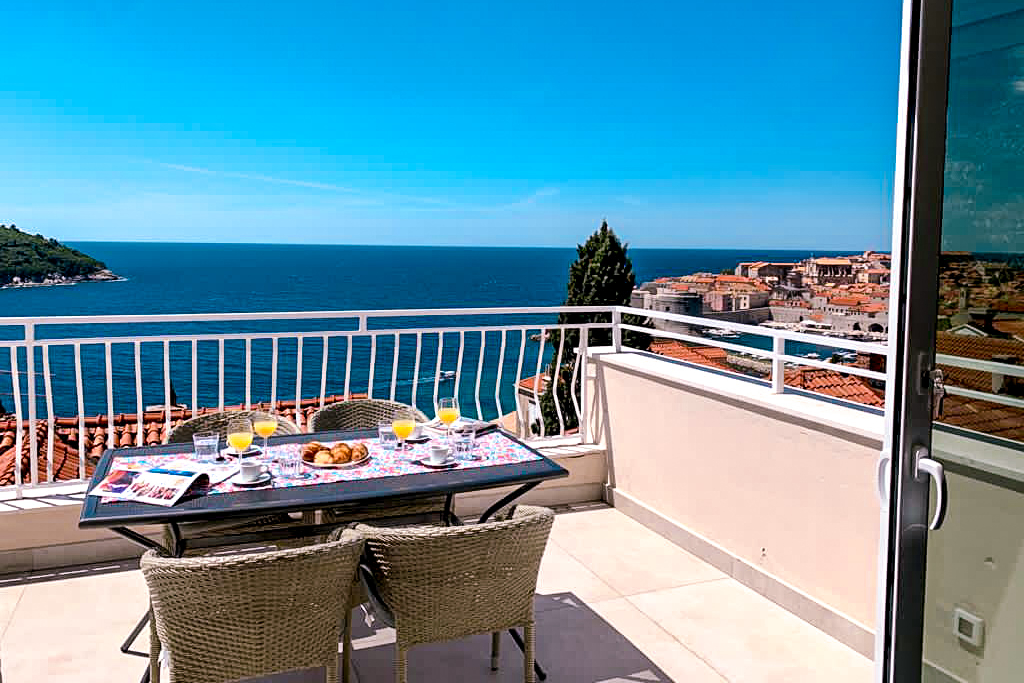
This is our family accommodation of 8 apartments, all with sea-views, located just above the Old Town. A boutique accommodation built with care and attention to detail, every unit has a private balcony with a view. Guests highly rate the cleanliness and staff and that’s something we’re proud of. We want everyone who stays with us to feel like they’ve found a home away from home.
Luxury: Hotel Excelsior
This is one of the oldest and most prestigious hotels in the city, with over 100 years of tradition. Its location close to the Old Town and the beach can’t be beaten and the views of the Old City and Adriatic Sea are unrivalled. Hotel Excelsior also offers a spa, fitness centre and three on-site restaurants — perfect for those looking to relax and indulge.
Things to Do in Dubrovnik, Croatia 🏰
1. Walk Along the City Walls 👟
If you come to Dubrovnik and don’t walk the City Walls, it’s like you haven’t been here at all.
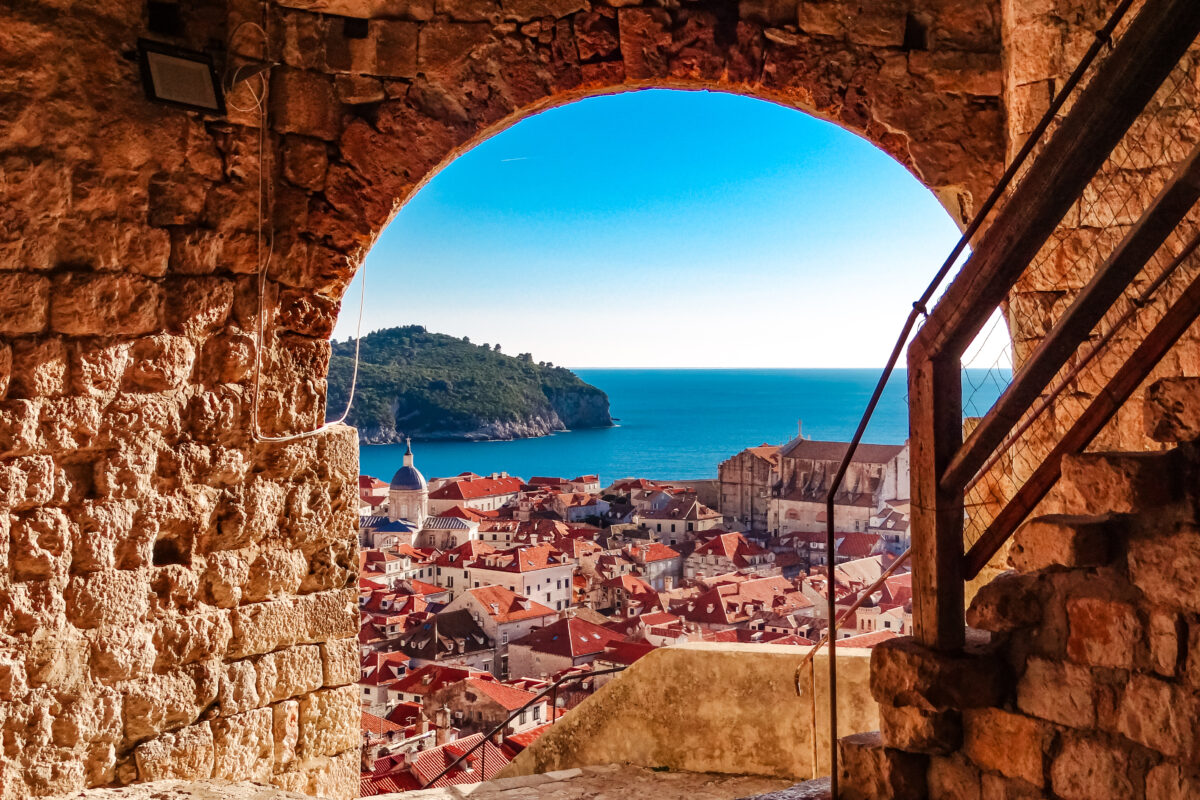
From the City Walls, you get the best view of Dubrovnik with the UNESCO World Heritage Old City laid out beneath you, orange rooftops glowing in the sun, and every photo looking like it came from a professional. As you walk along the walls, you’ll pass fortresses and towers built by our ancestors, like Minčeta Fortress and Lovrijenac.
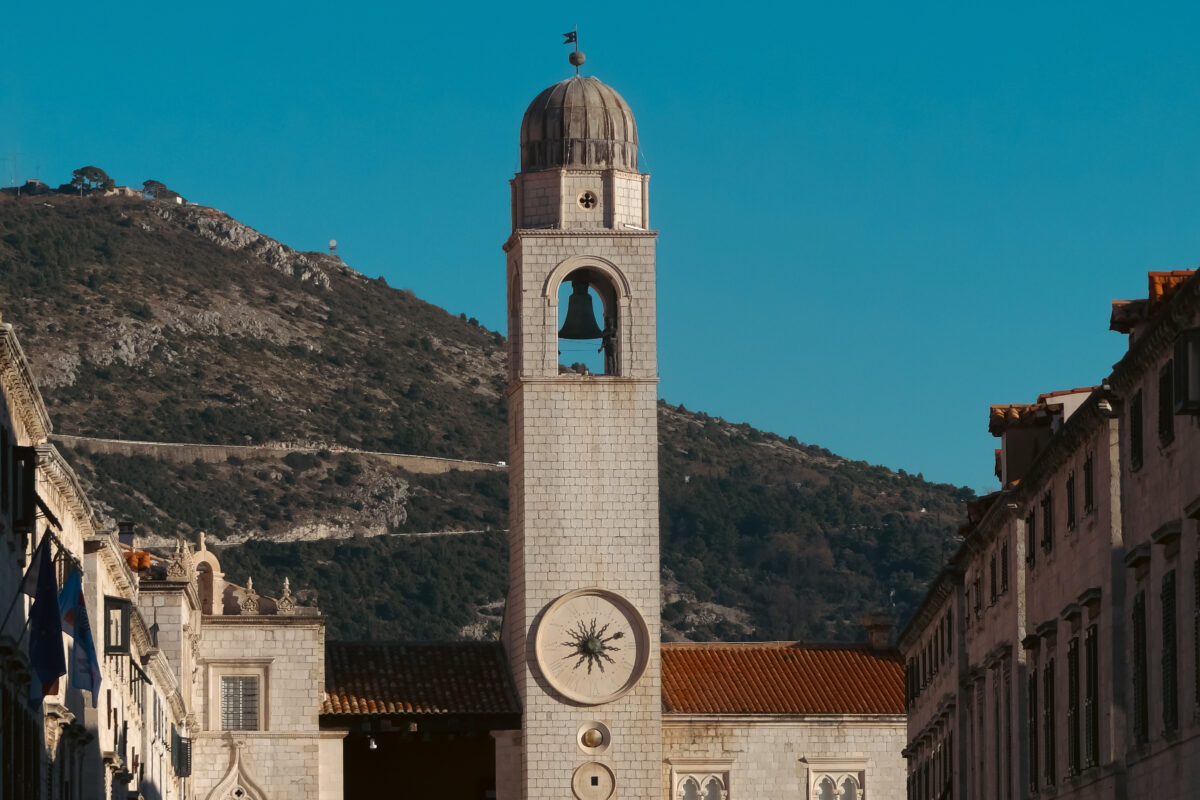
One part I always like to point out, because most people completely miss it, is the Upper Corner Tower (Tvrdava Gornji Ugao). It’s a hidden gem, recently restored, and it holds a piece of history most tourists never hear about. This was once an active manufacturing site during the time of the Dubrovnik Republic. Bronze was cast, bells were forged, weapons were made, and gunpowder was prepared here. It proves that the people of Dubrovnik weren’t just sailors and merchants — they were skilled craftsmen and manufacturers who exported goods across the Mediterranean.
Right next to this spot is one of the most beautiful basketball courts you’ll ever see, with a view over the Old City that’s hard to describe unless you’ve stood there yourself. I spent a lot of time playing there as a kid. It’s still one of my favorite places in town.
2. Visit Lokrum Island 🦚
Lokrum is one of those places you simply have to visit when you’re in Dubrovnik. Its history goes back more than 1,000 years, and it’s known to locals as the Island of Love. It’s also where Richard the Lionheart was shipwrecked after surviving a storm at sea!
But Lokrum isn’t just famous for legends — it has one of its own. There’s a long-standing story that the island is cursed. When the Benedictines were forced to leave Lokrum centuries ago, they walked around the island three times with candles turned upside down, saying curses. Every owner since then has reportedly died under mysterious circumstances. Legend says that if someone ever collects all the melted wax from those candles, the curse will be broken. Until then, one rule holds strong: don’t take anything from Lokrum.
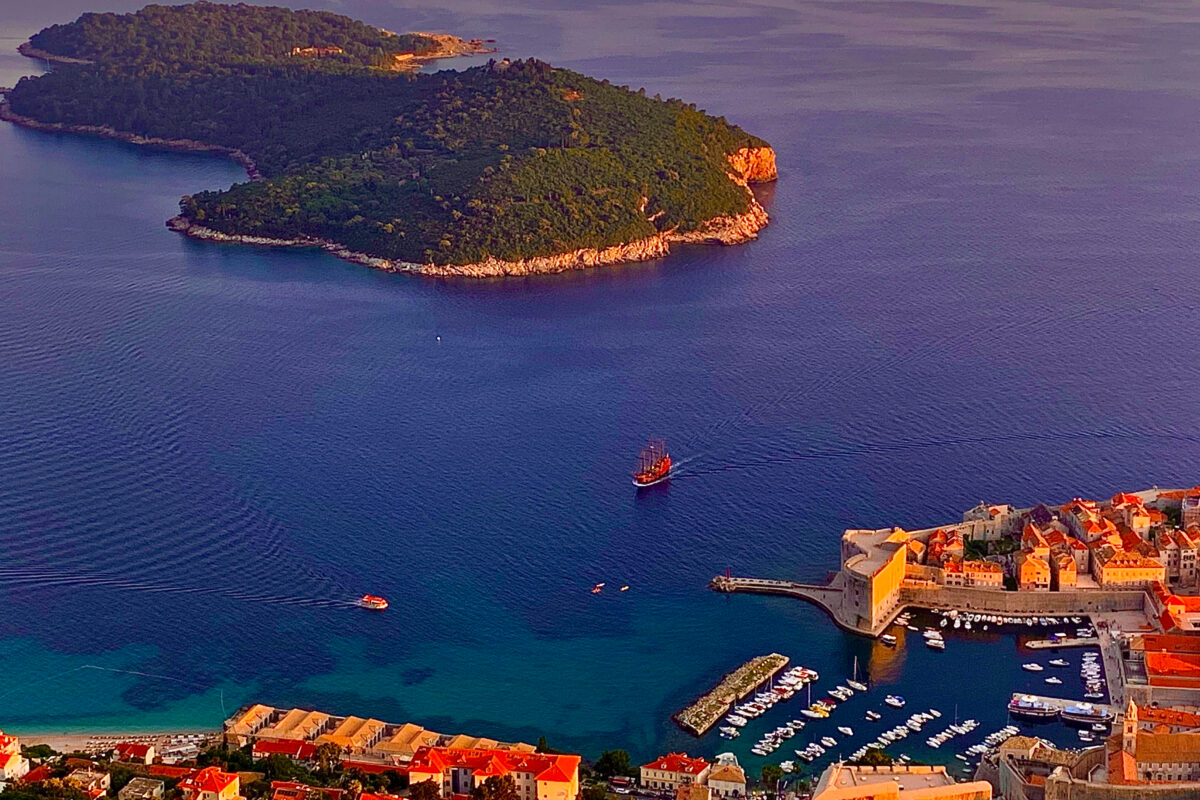
“For me, this island is more than just a cursed legend. My great-grandfather was a forester on Lokrum. He lived there in the house in the port called Lugareva Kuća, and my grandmother grew up on the island. When I was around 10 years old, just after the Homeland War, I started visiting Lokrum every day during the summer. Back then, there were hardly any tourists. I’d take my small boat with my friends and spend full days exploring the island, swimming, climbing, fishing—it was pure freedom. Even today, when I need to escape from stress and everything, I head to Lokrum.” Josip Leoni, Europe Backpacker Contributor
You’ll see peacocks walking freely around the island, ancient ruins, Benedictine Monastery, Botanical gardens, and thick pine forests. If you like hiking, you can climb up to Fort Royal for what I think is the best panoramic view of Lokrum and the Adriatic Sea. (Though just a heads-up—the final climb is steep. They call it the “Path to Paradise,” but honestly, it’s more like a highway to hell if you ask me! 😅)
There’s also the island’s Dead Sea — a saltwater lagoon perfect for swimming. When you float there, surrounded by cliffs and trees, it feels like you’re in a scene from the movie The Beach with Leonardo DiCaprio.
And if you’re traveling with kids, this is the spot. My own kids love going to Lokrum, especially feeding the peacocks. I loved it just as much when I was their age. Honestly, Lokrum is one of the few places that feels untouched, peaceful, and magical—no matter how many times you visit.
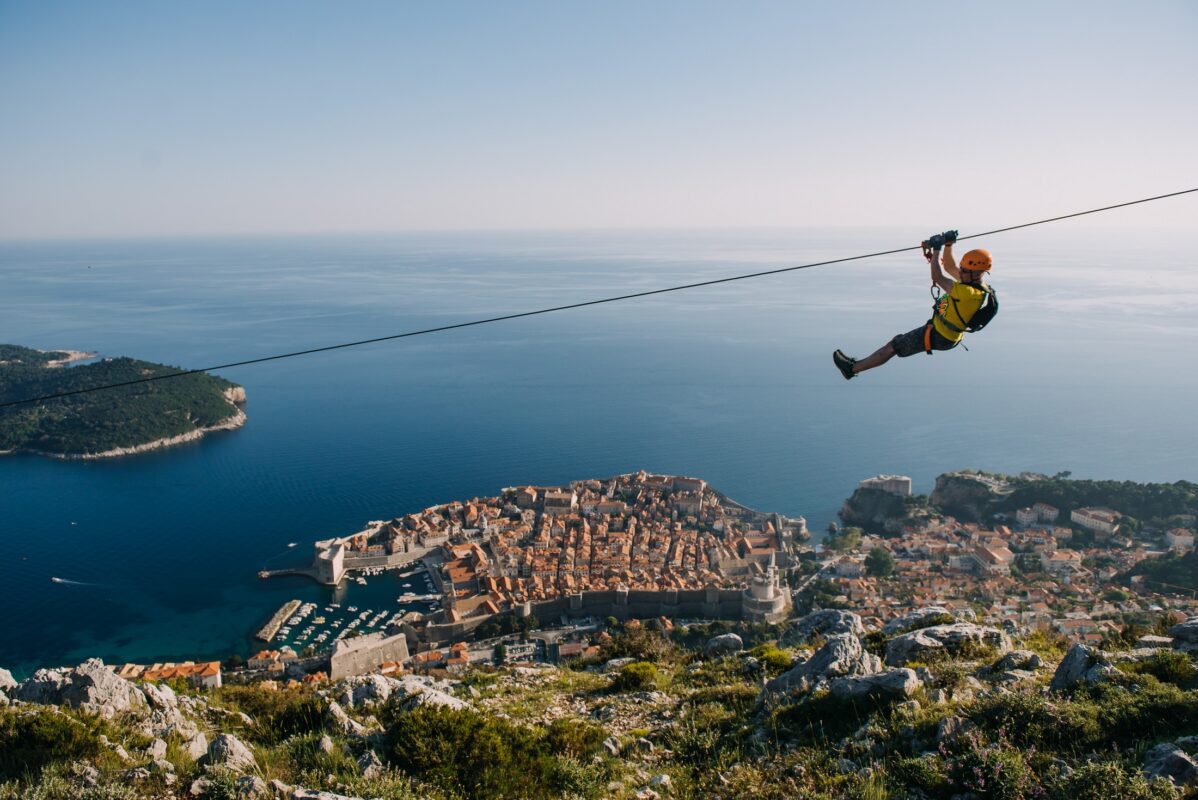
3. Zipline Down Srđ Hill at Sunset 🚡
Take the cable car up Srđ Hill during sunset and you’ll understand why this is a must-do.
Even better: visit Panorama Zipline, right next to the cable car station for the best view in Croatia! They even have a Sunset Zipline experience that ends with a glass of wine overlooking the sea, and they received an award for one of the top 10 European outdoor activities last year.
Kids can join too. My kids started at age 3 with guides, and they want to go again all the time. They don’t have any age limits but there is a weight limit of 117 kg.
4. Take a Boat to the Elaphiti Islands 🛥️
There are 13 islands in the Elaphiti archipelago off the west coast of Dubrovnik, but the main three are:
- Koločep (aka Kalamota)
- Lopud
- Šipan
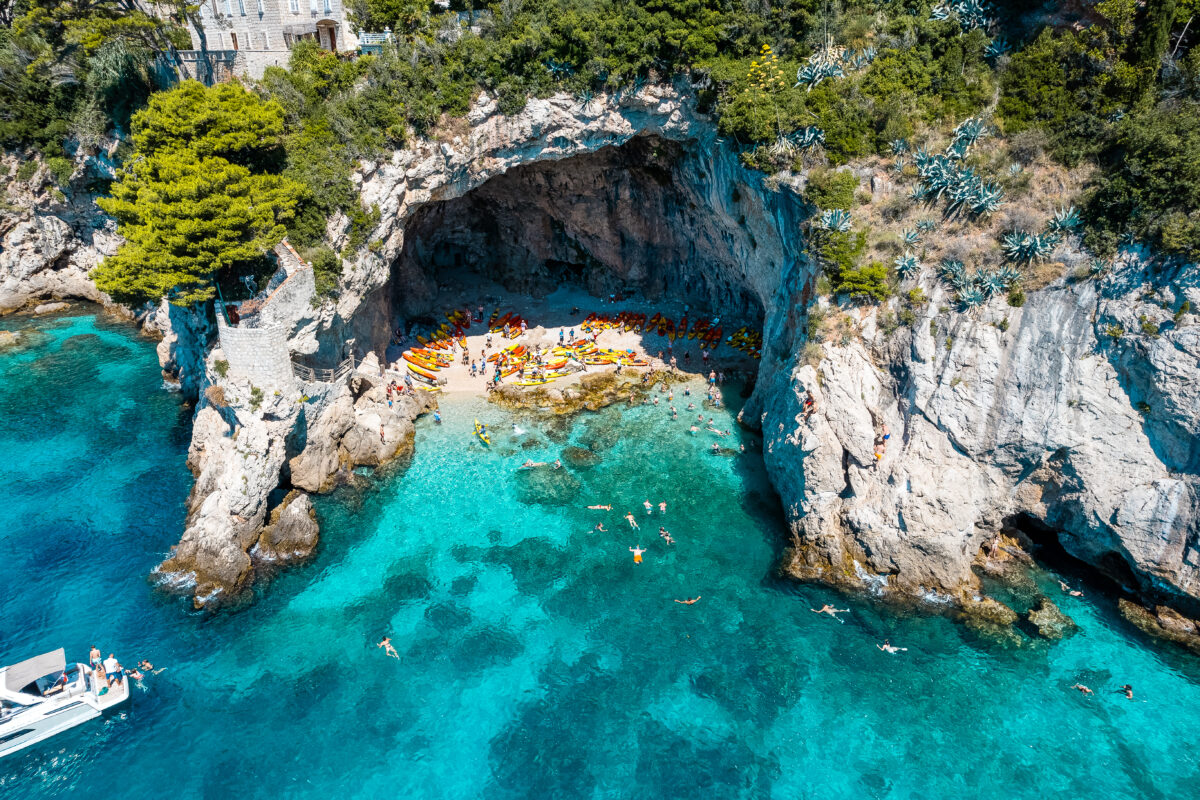
I always recommend people to take a private speedboat tour when visiting the Elaphiti Islands because, honestly, that’s the only way to reach some of the most beautiful and hidden spots around Dubrovnik. Places like the Blue Cave, Green Cave on the island of Koločep, or Šunj Beach on Lopud—the only sandy beach near Dubrovnik, where the shallow turquoise water and white sand will make you feel like you’ve landed in the Maldives. There’s also Sjekirica, a small peninsula that feels like a private blue lagoon. You can only get there by private boat. By land it’s nearly impossible to reach.
One of the things that makes the Elaphiti Islands so special is that when you visit, you don’t just see beautiful beaches and caves, you get a glimpse into the past and feel real local. The way people live there hasn’t changed much over time. You might actually feel that more on the islands than in Dubrovnik itself. Everyone knows each other. The community still exists. It’s something you don’t feel anymore in big cities. And that’s what makes the Elaphites worth every second.
5. Explore the Local Shops 🛍️
KAWA
I’d definitely recommend checking out Kawa. It’s a unique little spot known for its hand-crafted souvenirs, but also a great place for digital nomads and travelers who want to slow down for a bit.
They serve Cogito coffee, roasted in Zagreb, and the vibe is relaxed and creative. It’s the kind of place where you can sit down, have a proper cup of coffee, get some work done, or just enjoy the moment. It’s where you combine the pleasant with the useful — local design, local coffee, and a peaceful space to take a break from walking the city.
MALA SPENZA
I’d also recommend a shop called Mala Spenza. It’s a small place focused on local products made by real people from the countryside — farmers who raise their own cows, grow their own vegetables, press their own olives.
You’ll find things like homemade cheeses, cured meats, award-winning olive oil, and other traditional Croatian products you won’t get in the big supermarkets. Everything is authentic and top quality.
If you’re the kind of traveler who wants to taste what locals actually eat, this is the place. I go there myself, because whenever I travel, I always want to try local, not commercial. Mala Spenza is exactly that.
GALERIJA TALIR
If you’re looking for a unique local souvenir, I’d definitely recommend the Talir Gallery, located right in the city center. They sell handmade items like Dubrovnik-themed magnets, small wooden boats, and beautiful paintings of the city, all crafted by Maro Cetinić, the son of the gallery’s owner.
In a sea of generic, mass-produced souvenirs, Talir stands out. It’s the real thing. Each piece is made by someone who lives and breathes Dubrovnik, with his own hands and his own story behind every item.
It’s a great way to bring home something meaningful, while also supporting a true local artist and family-run business.
Food and Drink in Dubrovnik, Croatia 🍲
Five of the best restaurants in Dubrovnik:
1. Konoba Pjatanca
I’m someone who respects tradition, so if I had to recommend one place for a proper local meal, it would be Konoba Pjatanca.
It’s the oldest restaurant at Ploče Gate just steps away from the Old City, and the only restaurant in the entire Old City area that serves real peka the way it’s meant to be made.
Peka is one of the most iconic local dishes. It’s slow-cooked under a heavy metal lid (we call it a bell) covered with hot coals and fire. Inside, you’ll find lamb, veal, or octopus, cooked with potatoes, vegetables, herbs, and olive oil, left to roast for 2–3 hours. The result? Tender, juicy, flavorful meat that falls apart with a fork. It’s not something you can fake. It takes time, patience, and skill.
At Konoba Pjatanca, you can also try pašticada, another traditional dish from our region. It’s a rich, slow-cooked beef stew in a red wine and prune sauce, usually served with homemade gnocchi. Again — real food, done properly, no shortcuts.
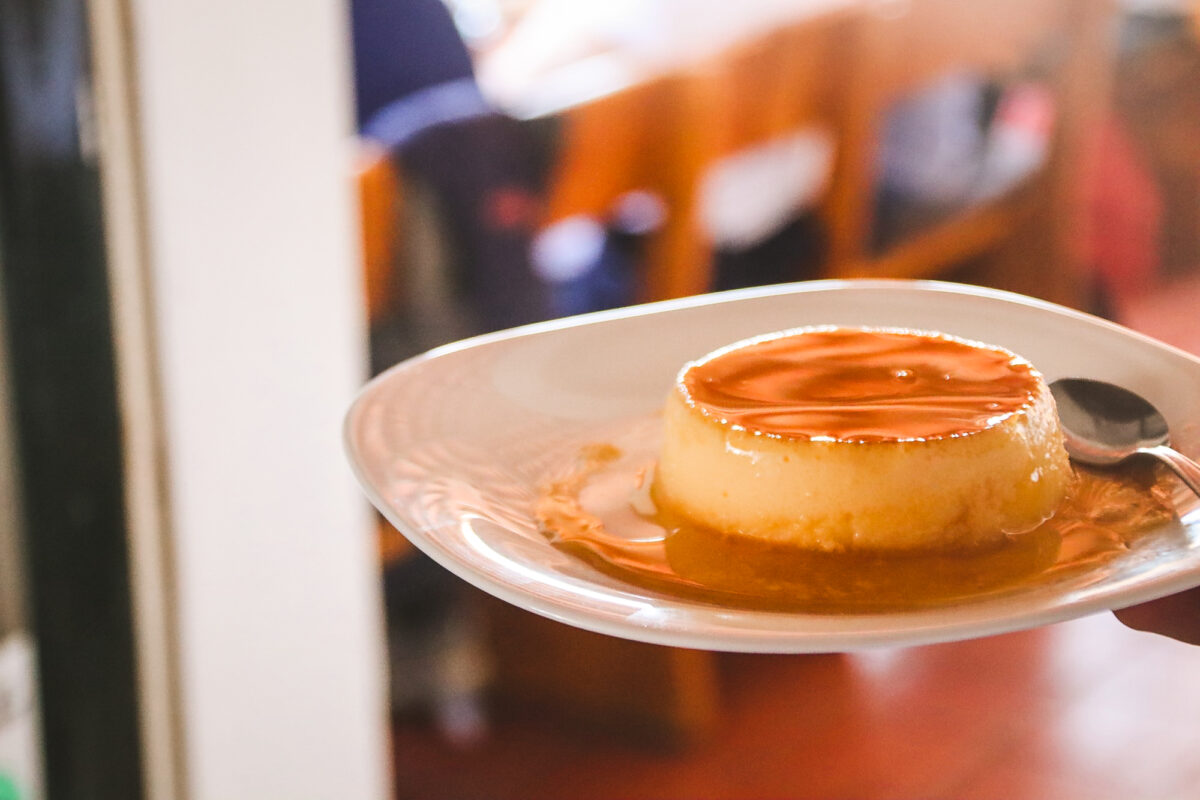
Make sure to leave some space for rozata, one of the best local desserts which is similar to creme brulee.
2. Azur
Local meets Asian food at Azur. The owner married an Indonesian woman and together they run this spot combining Mediterranean flavors with an Asian twist. Unique, different, and worth it.
3. Restaurant Dubrovnik – Lopud Island
One of the best fish and seafood restaurants sourcing daily from local Lopud fishermen. Dishes like buzara (a traditional seafood stew) are always fresh and the best pick. It’s located right by the sea. Come for the food, stay for the sunset.
4. Panorama Restaurant – Srđ Hill
If you want the view, this is it. Book early as it gets packed months in advance. Their terrace view over the Old City and Adriatic is something you’ll never forget.
5. Barba – Street Seafood
If you’re looking for something quick, affordable, and a bit different, Barba is a great choice.
It’s a small street food spot that keeps things simple, but what makes it stand out is that everything on the menu is seafood. You’ll find things like octopus burgers, shrimp burgers, fried oysters, calamari, and more. It’s casual, fast, and really tasty.
One of the best deals is their seafood plate for two — a big portion packed with fresh bites from the sea, and it’ll cost you around €60, which is very reasonable for Dubrovnik, especially considering the quality and location.
Getting Around Dubrovnik, Croatia 🚶
The Old City is navigable on foot, but beware there are lots of steps everywhere — bring comfortable shoes!
Top tip: don’t rent a car. Parking is a nightmare. Public parking can be €20/hour. Since June 2025, only residents are allowed to drive around the Old City area or restricted areas. Visitors can be fined €260 for passing into the restricted area without permission. If you need to use a car, take a taxi. It’s cheaper than one hour of parking and smarter.
Final Tip: Stradun Prices Explained 🪙
One of the best tips I can give to anyone visiting Dubrovnik (and something I even made a video about that local media picked up) is this: if you decide to sit on the main street, Stradun, for a coffee, a cocktail, or a meal, just know you’re going to pay more. That’s not a scam — it’s just how it works in every top tourist city.
The bars and restaurants on Stradun pay extremely high rents, often over €20,000–€30,000 a month, just to be in that location. So naturally, prices are higher. You’re not paying for the cup of coffee, you’re paying for the full experience.
Personally, the most expensive cappuccino I’ve ever had was in St. Mark’s Square in Venice (€16!). But I sat there knowing what I was paying for: the band playing live music, the atmosphere, the full experience. The cappuccino was just part of it. I didn’t regret it at all.
It’s the same in Dubrovnik. If you sit on Stradun, you’re paying for the moment. But if you want the same drink at half the price, just head to any of the nearby side streets. You’ll find it right away for half the price.
How to Get To Dubrovnik, Croatia 🚌
Dubrovnik has its own international airport with direct flights to dozens of destinations in Europe. If you’re coming from elsewhere in Croatia, Dubrovnik is around a four-hour drive from Split or six hours from the capital, Zagreb.
Where to Go Next: ➡️
A few hours northwest of Dubrovnik, you’ll find the much-loved coastal city of Split; continue along the Dalmatian coast for pretty, historic Šibenik, or head inland to explore Croatia’s capital city, Zagreb.

Josip Leoni
A Dubrovnik local, Josip is owner of Sea Fun Dubrovnik, whose motto is ‘every guest deserves an unforgettable experience.’ He also runs the Dubrovnik Croatia Travel 2025 Facebook Group, helping independent travellers to get real, local advice. His goal is to help visitors enjoy Croatia and leave Dubrovnik with great memories, wanting to come back again. “Because tourism shouldn’t be about charging someone once and never seeing them again. It should be about creating an experience that makes people feel like they’ve found a second home.”